


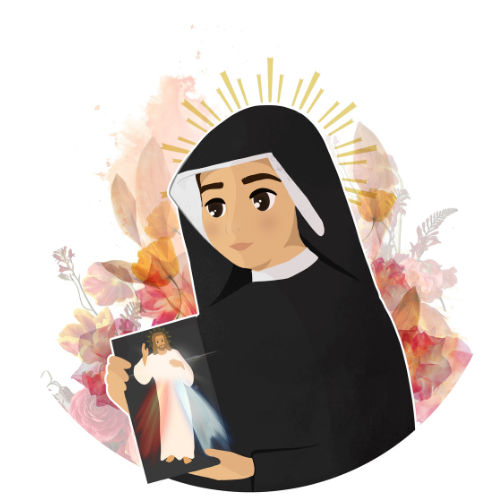
Saint Faustina Kowalska

5th October

Saint Faustina of the Blessed Sacrament is the bearer of the universal message for humanity of God’s love for us, manifested in His infinite mercy. It is a mercy that cannot be measured because it embraces all, irrespective of whatever shortcomings and failures, we might be carrying.

St. Faustina tells the world that the Suffering Christ expects us to turn to Him and with a sincere and contrite heart, declare, “I trust in You.” Following her example, we can all find refuge and spiritual strength in the Blessed Sacrament, upheld by the intercession Mary, the Immaculate Conception.

Besides declaring her a Saint for Divine Mercy, Pope John Paul ll, also declared the First Sunday after Easter to be dedicated as the Sunday of Divine Mercy, with a novena (nine days of prayer) starting on Good Friday.

Enjoy the videos and music that you love, upload original content and share it all with friends, family and the world on YouTube.

We can never really understand the depth of Divine Mercy. We can start to have a taste of it by measuring it as a human quality of a generous heart. What is mercy? Mercy goes beyond forgiveness. It is rooted in compassion and empathy. It means being open even to those with whom we disagree. It involves nurturing positive feelings towards others.

St. Thomas Aquinas describes mercy as “a compassion in our hearts for another person’s misery, a compassion which draws us to do what we can to help him.” In 2015 Pope Francis focused on the fact that “Jesus Christ is the face of God’s Mercy” and called the Jubilee Year of Mercy.

While on earth, Jesus mirrored the Mercy of God, manifested in His goodness, His gentleness, HIs tenderness. Compassion is present as a factor in the miracles He performed, making Him personally involved.

Make use of a Children’s Bible and with the children look up:

  • the raising of the widow’s son;
  • the raising of Jairus’ daughter;
  • Jesus weeping at Lazarus’ death (you may discover more!).

Children will also appreciate the incident where Jesus welcomes the children and forbids the apostles to send them away. In all situations focus on the tenderness of Jesus’ words. That is how He continues ‘to feel’ towards us. He expects us to feel the same towards others. Encourage children to talk about situations or even about people in their young life, where they feel they cannot accept, tolerate let alone befriend others, (explore situations at school, youth groups, sport activities, even in family gatherings). Discuss with them possible actions to overcome their negative attitudes.

“Jesus, I trust in You” is the prayer that accompanies the devotion of Divine Mercy.  What is trust? What do children understand by trust? You may decide to play the Trust Walk: Scramble the furniture in the room, blocking passageways. Blindfold the child and ask him if he trusts you to lead him around without stumbling into anything. Hold his hand and without pushing him guide him around to avoid stumbling. 

Ask the child why he accepted you as a guide.  Elicit feelings of confidence in you because you love him, you want to keep him secure and protect him from harming himself. Would he have let just anyone to guide him around? Exploring the qualities of trust provides an opportunity to explore with the children who they would trust, especially with people they don’t know.

With the older children, one can discuss this value where friends are concerned. We can always trust in Jesus because He will never betray us. He will always protect and love us.  With Him as our Friend we will feel secure.

St. Faustina had a special devotion to the Blessed Eucharist. With our children let us continue to consolidate the focus on the Eucharist on entering a church, on the reality of the Presence of Christ at Mass and after receiving Him at Holy Communion.

Family Prayer Time:  start a prayer: “Jesus I trust in you because …… (you will always love me, you will always protect me, for example).” Address Our Lady: “Mother Mary hold my hand to lead me to Jesus as you held His hand as a child to protect HIM.” You may consider praying the Chaplet of the Divine Mercy.

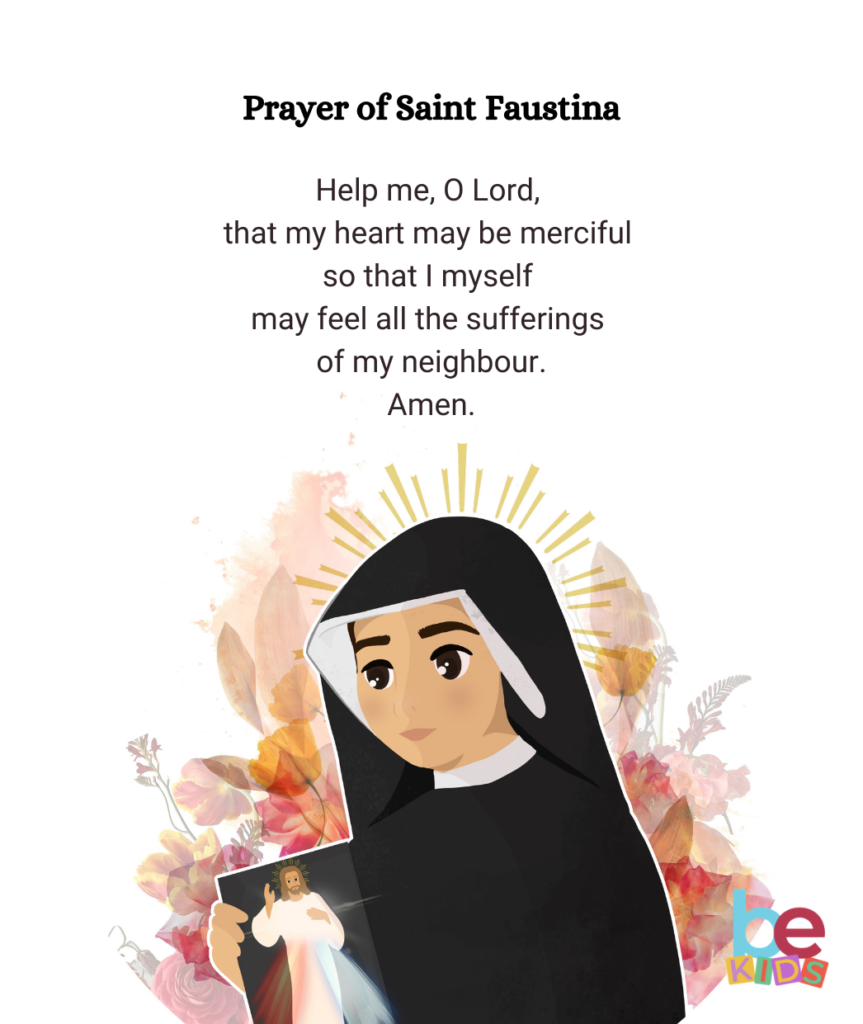
Faustina’s family was very poor.  When she was 14 years old, she left school and started working to support her family. She felt the God was calling her to become a nun. In her writings, she stated that she had seen and spoken to Mother Mary and Jesus. In fact, Jesus appeared to her as the Divine Mercy and she painted what she saw: Jesus wearing a white garment with his right hand raised in a sign of blessing and the other hand touching the white garment with red and blue rays coming out from the garments. St. Faustina encouraged people to pray the Divine Chaplet. She also offered many prayers for the priests.
Enjoy the videos and music that you love, upload original content and share it all with friends, family and the world on YouTube.

Let’s thank a priest!

This week, create a thank you card for a priest. Decorate the card the way you like, and in it, write a thankful message and write a prayer you’re praying for this priest. This week, make sure that you pray more for all the priests to continue to serve the Lord!. Don’t forget to send us a picture of your card, and if you want, you can take a picture of yourself giving the card to the priest! We will then upload it on our web page!

Don’t forget to say the Divine Mercy Chaplet Prayer! This video will help you say and understand the Divine Mercy Chaplet.

You can also start saying the whole prayer together with this video.

How to use this space

God speaks to us in many ways, including through the Saints of the Church. Here you will find useful background and activities to better understand the holy life, helping you to connect the saints to daily life in a meaningful way.