





What we know about most of the saints and martyrs of the early Church, regarding their life and background, is based on tradition, so the information about them tends to be varied.
In fact, what we know about St. Agnese, stems from inscriptions at the place of her burial, the location where she was martyred and buried.
In Greek the name ‘Agnes’ means ‘chaste’ and in Latin it means ‘lamb’. It is believed that she was martyred in 304 AD and that she was only 12 or 13 years old at the time so that marks her birth date around 291 AD.
Her parents were Christian of noble lineage in the Roman Empire when the Emperor Diocletian persecuted Christians, with the intention of the eradication of Christianity. In fact, in 303 AD, together with his co-ruler Galerius he decreed that all Christian places of worship and books be destroyed, while Christians, especially priests, were put in prison, tortured and martyred when they refused to denounce their Christian belief to give homage to the emperor.
It is believed that one day, Procopius, the son of a Roman prefect, saw Agnes as she was on her way home and he was taken up by her beauty. He fell in love with her and offered to marry her. To win her, he brought her gifts and promised her his family riches. She refused him, stating that Christ was her only spouse.
When Procopius’ father found out that she was a Christian, he arrested her and put her on trial. She refused to comply with the proposals of the emperor and to renounce her Christian beliefs. When she was tortured, by being subjected to humiliations to attack her purity, tradition holds that she was protected by divine intervention.
After Agnes was sentenced to death, she was led out and bound to a stake to be burned, but the bundle of wood would not burn, or the flames parted away from her. The officer in charge of the troops drew his sword and beheaded her.
The remaining bones of Saint Agnes rest beneath the high alter of the ‘Basilica of Sant’Agnese fuori le Mura’ in Rome.
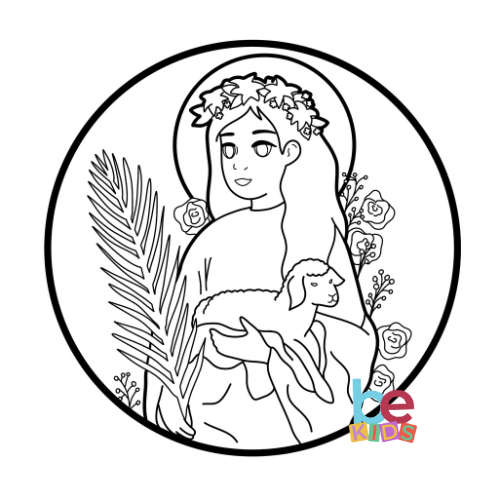
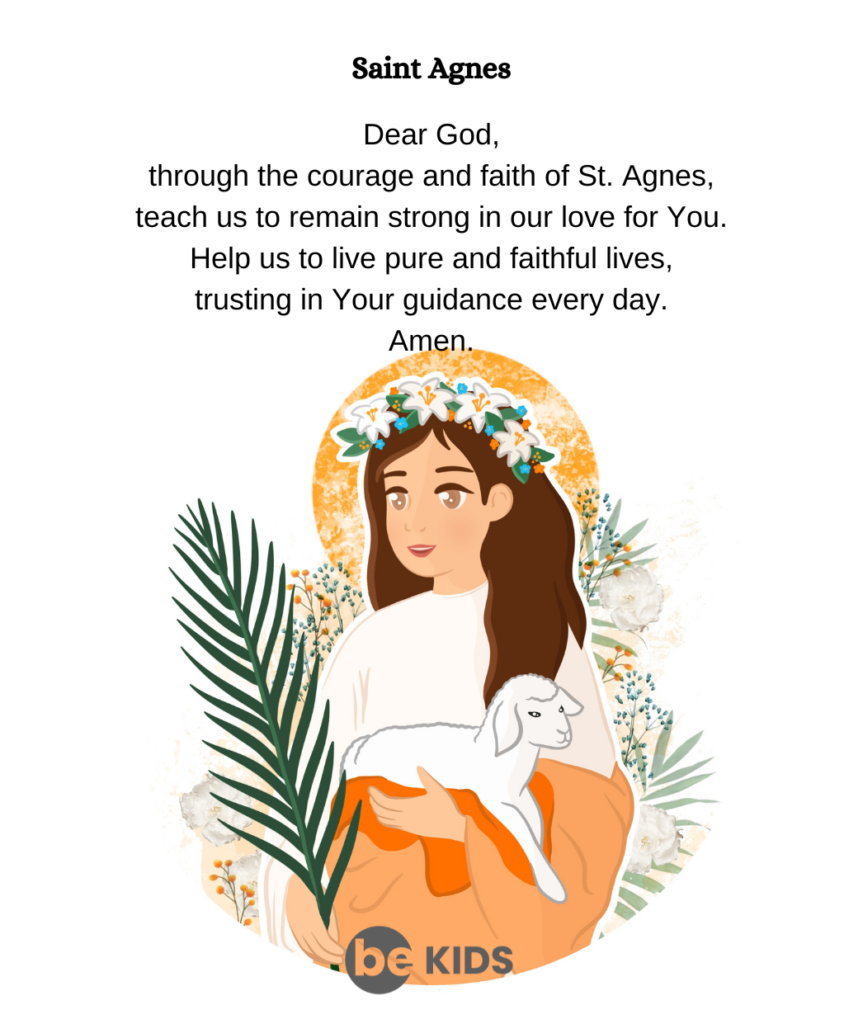
In art, Saint Agnes is frequently depicted holding a lamb (symbolizing purity and matching the Latin sound of her name, agnus) and a palm branch (symbolizing martyrdom).
This week’s content


About
This new bekids.mt aims to offer an even more comprehensive catechetical formation for children preparing to receive the sacraments.