




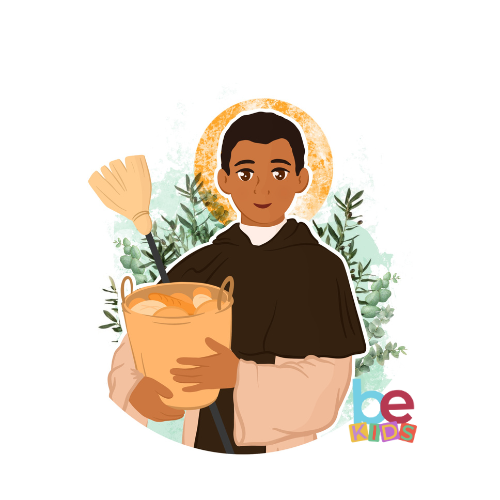
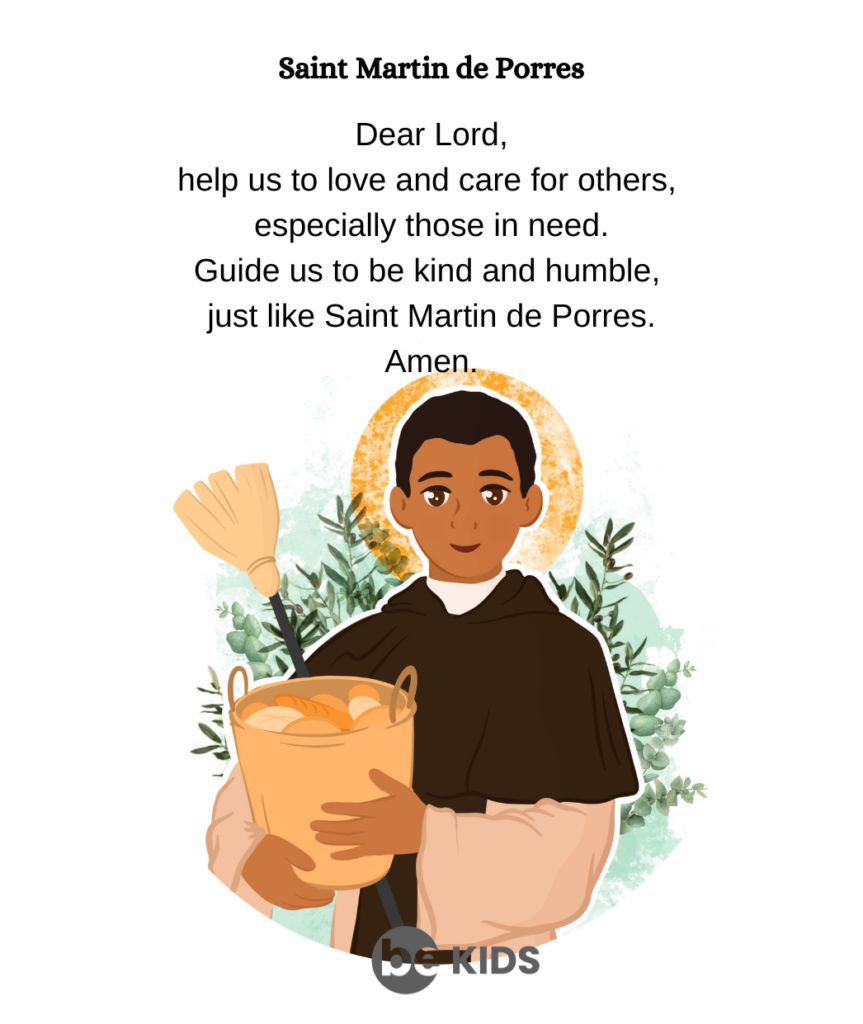
St. Martin de Porres is often depicted wearing the habit of the Dominican Order, carrying a broom, seemingly contrasting characteristics that produced a Saint!
His full name was Martin de Porres y Velasquez, a grand name for Martin, who came from a poor family from Lima, a Viceroyalty of Peru. He was born on the 9th December, when Peru was under Spanish control and when the natives were oppressed and taken as slaves. The missionaries who came to the region defended the rights of the natives but to no avail.
Martin was born in this environment of political, social and racial injustices. Martin’s mother, Ana, was a freed slave of either African or native descent and therefore she was dark skinned. His father, Don Juan de Porres, was a Spanish nobleman. As his parents were not married, Martin was labelled ‘mulatto, an illegitimate child of mixed race’. When Martin’s sister was born, the father abandoned the family, ashamed that his children had turned out to be dark-skinned.
Ana raised her children on her own in poverty, with meagre earnings doing chores for wealthy families. She gave her children a faith formation that resulted in a development of profound love of God in Martin, who even at a young age showed his love of the poor and suffering.
Ana sent Martin to a primary school for a couple of years, but then she placed him as an apprentice with a barber, seeking some extra income to ease their poverty. In those days, a barber not only cut hair, but also administered basic medical treatments. Martin loved this trade because it gave him the opportunity to be of service to others. During this time, he continued to develop a deeper sense of prayer and union with God. He felt admiration for the Dominican Friars, and he sought to be admitted, at least as a non-professed lay brother, because the Spanish law forbade those of mixed race to become full members of a religious order.
Martin was 15 years old when he was granted permission to live within the Dominican community as a volunteer to carry out menial tasks in the kitchen, in the laundry and cleaning floors. He also started practising his trade of barbering and attending to medical requests. Later he was also appointed almoner, to distribute money to the extreme poor.
The Dominican Superior bypassed the Spanish law, and Martin was accepted as a Dominican lay brother at the age of 24. By this time, his father had acknowledged him, hence the surname de Porres. But it was after another 10 years that he was presented with the Dominican habit and entrusted with the infirmary, where he remained in charge till his death. People from all walks of life sought him for medical advice and interventions but even so, some people continued to look down on him.
Bro. Martin used to spend hours before the Blessed Sacrament. He had a deep devotion to Our Lady and did penance to the point of offering himself to be sold as a slave when the Fraternity had financial problems. His unconditional love and care embraced everyone, African slaves and Spanish noblemen, rich or poor, sick and desperate, especially during an epidemic in Lima.
He was blessed with miraculous cures after his interventions. He also founded an orphanage for abandoned children and slaves supporting whoever sought his help in the best way he could.
He died on November 3, 1639, in Lima at the age of sixty. He was canonized by Pope John XXIII in 1962.
This week’s content
About
This new bekids.mt aims to offer an even more comprehensive catechetical formation for children preparing to receive the sacraments.