


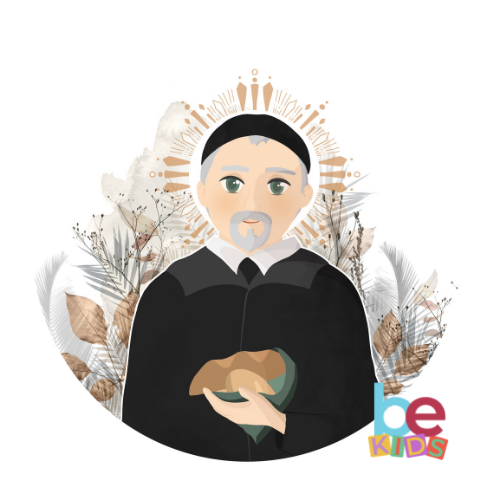
Saint Vincent de Paul

27th September

Vincent was born on April 24, 1581, in Pouy, near the Pyrenees mountains in France. His parents owned a small farm from which they earned their living. When his father saw that Vincent loved to study, he decided to educate him and sent him to study at a college run by the Franciscans.

In 1600, he was ordained a priest and continued his studies until 1605. While travelling by sea from Marseille, he was captured by barbary pirates. He was taken to Tunis, North Africa, and sold into slavery. He escaped slavery alongside his Christian master, whom he had converted to Christianity and together they   fled from Tunis. After a short visit to Rome, he returned to France in 1607.

It was in 1617 when, while in a village, he heard the final confession of a poor man before he died and realized how much the poor of France needed someone to care for them. From that moment on, he devoted himself to working for the poor—in prisons, in hospitals, and among galley slaves. In 1619, he was officially appointed Chaplain to the galley slaves.

In 1625, he founded the Congregation of the Mission (also known as the Vincentians or Lazarists) to preach missions to the rural poor and train parish priests. Few years later, he co-founded the Daughters of Charity of Saint Vincent de Paul with St. Louise de Marillac. These religious women dedicated their lives to the sick and the poor.

Vincent was a man who brought joy wherever he went. He was sensitive to the needs of others.

Saint Vincent de Paul died on September 27, 1660. He was canonized by Pope Clement XII. He is the patron of the charity, charitable societies and volunteers.

The key principle underlying the mission of St. Vincent de Paul is the virtue of CHARITY. Growing in the virtue of charity goes beyond being charitable. It is more than just being generous by donating to charities. Charity involves the friendship of man for God, being able to love the way God loves. It means accepting one and all with an open heart, without distinction, irrespective of race and colour. It means making a positive difference.

Create an opportunity to discuss with the children if they can identify people who would welcome others to open their heart to them.  These might include lonely neighbours, elderly people in the parish, refugees who might feel rejected in the community, children at school or in sporting activities who tend to be loners, prone to being bullied. They might even include members of the extended family with whom they don’t get on well! Let them discover ways how they can make them feel accepted, wanted, loved.

Help the children find out about groups in the Parish and other organisations that function on a national basis, that aim to help the needy and the vulnerable (such as Puttinu Cares and Dar tal-Providenza). Emphasise that most of these entities, although they employ people for specialised services, continue to survive because they are supported by several volunteers. 

Charity begins at home. Suggest ways where the children can be of service to others:
– At home they can offer to do a chore that is not one of their responsibilities,
– lay the table before a meal,
– if old enough, serve members of the family at table,
– offer to fetch and bring when the need arises,
– bake a cake and serve it as a treat to the family!

Help them put up a chart with a colourful image of a heart with a statement in its centre, “God Loves You.” Let members of the family sign in their name with a statement “And So Do I” around it.

Family Prayer Time: lead the children to verbalise their thoughts into petitions not only for those that are needy, sick and vulnerable but also for all volunteers who offer their time and energy in the service for others.

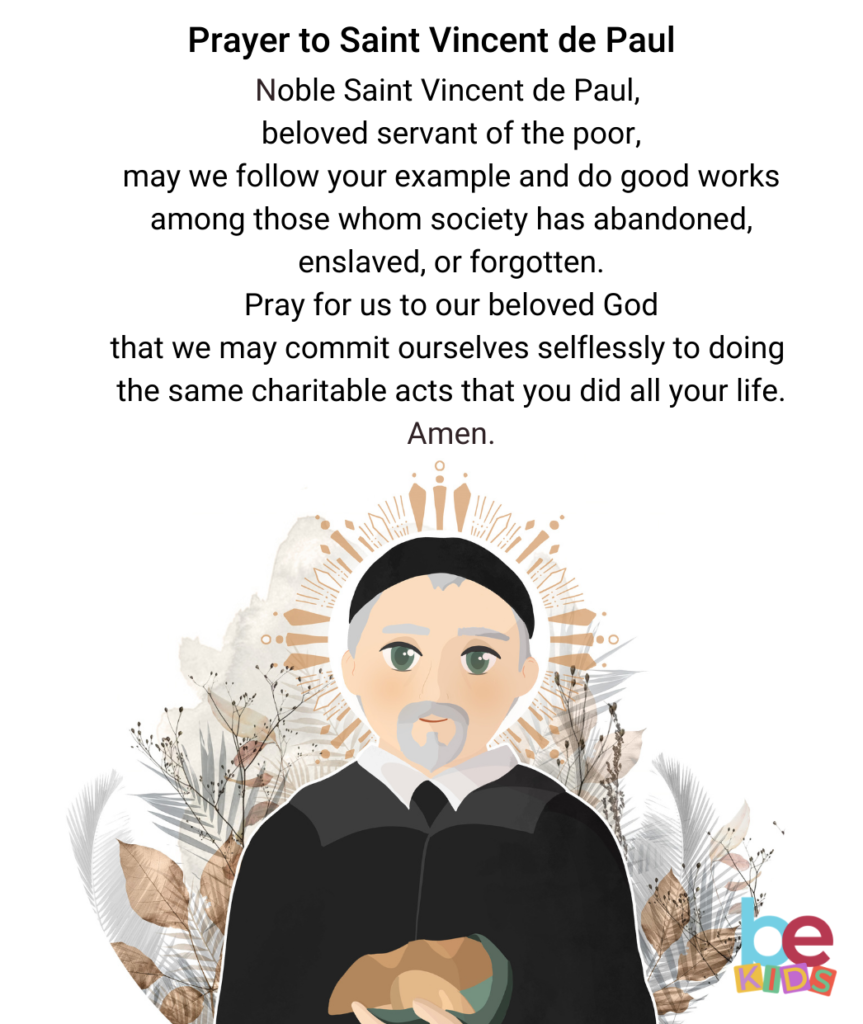
St Vincent helped and served the poor, those who were condemned to death and the prisoners, all in line with Jesus’s teaching.
Today we are going to make a bookmark!

Let us be like St. Vincent and make others feel they are loved and supported.

We need:

  • Colours/markers/decorations
  • A4 cardboard (any light colour) 
  • Scissors and glue

What to do:

  • On the cardboard draw and cut a rectangle (size 5cm x 20cm)
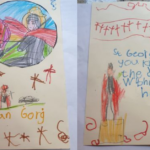
  • Write a motivational message on the rectangle and decorate with colours/markers/decorations. 
  • You may wish to do more than one! 
  • Take a photo of your bookmark/s and send it to us!

Afterwards, send or give these bookmarks to those who are suffering or passing from difficult moments. You may wish to send your bookmark to the prison or any other social service organisation. 

How to use this space

God speaks to us in many ways, including through the Saints of the Church. Here you will find useful background and activities to better understand the holy life, helping you to connect the saints to daily life in a meaningful way.