




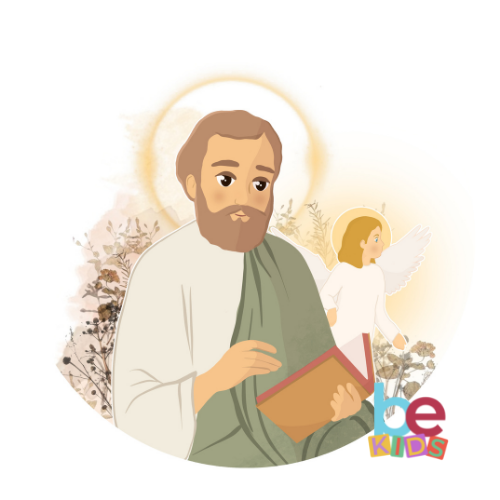
Jesus chose twelve men to be his companions during his public ministry on earth. These were the apostles, one of whom was called Matthew, also known as Levi, son of Alpheus. He was an accountant!
How did Matthew, who was a Jew, ended up collecting taxes for the Romans?
At the time, Palestine was ruled by the Romans who demanded the payment of taxes from all Jews. These taxes were sums of money demanded from all money earned, supposedly for the benefit and upkeep of the province. The men employed by the Romans to collect these taxes were called tax collectors or publicans. These men were considered as traitors and sinners because besides being considered as collaborators with the Romans, many of them charged their fellowmen more money in taxes that were due. Then, they would keep the extra money for themselves!
Matthew was one of these men. His life changed completely when Jesus saw Matthew sitting at the tax collector’s booth. (Matt.9, 9-13) Matthew’s eyes met the eyes of Jesus, followed by the dramatic call, “Follow Me.” There and then, Matthew left everything and followed Jesus. By the evening, Matthew hosted a dinner for Jesus, the other apostles and other publicans, under the gaze of the frowning Pharisees.
Matthew remained a close follower of Jesus as one of his apostles, witnessing the Lord’s miracles and teaching. He witnessed the Risen Christ, received the Holy Spirit on Pentecost, saw Jesus’ ascending into heaven and together with the other apostles was sent to preach the Good News.
It is believed that Matthew left Palestine probably for Ethiopia to the south of the Caspian Sea (present-day Armenia, not Ethiopia in Africa) where he continued to preach and convert people to the belief in Jesus Christ as the Messiah, the Saviour of the World.
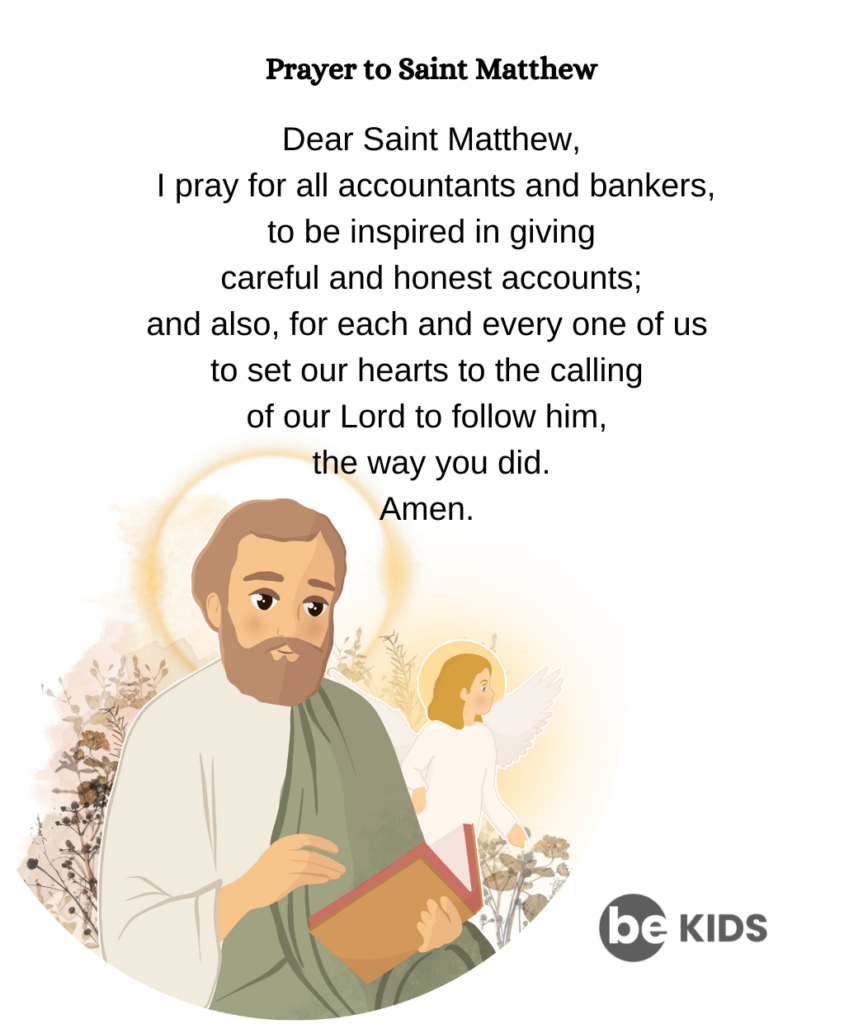
St. Matthew wrote the First Gospel. This Gospel was written in Aramaic/Hebrew for the Jewish Christians to convince them that Jesus was indeed the Messiah, the One sent by God to save all men. The symbol for St. Matthew’s Gospel is a man with wings or an angel, because his Gospel begins with the genealogy of Jesus.
There are various accounts about Matthew’s death, about whether he was martyred or died a natural death. Regardless of how St. Matthew died, the Church believes he led a saintly life and is now a powerful intercessor in Heaven.
St. Matthew is the Patron Saint of accountants, bankers, bookkeepers and tax collectors.


About
This new bekids.mt aims to offer an even more comprehensive catechetical formation for children preparing to receive the sacraments.